Dense antenna farms (collocated sectors, rooftop stacks, ship/vehicle masts) fail from passive intermod and rusty-bolt products as often as from active PA IM.
Site-planning habits that hold up:
1. Frequency plan before iron: map TX fundamentals, 2nd/3rd-order mixes, and LNA/RX front-end bandwidth. A "legal" channel pair can still land a PIM product on a neighbor's uplink.
2. Physical: maximize vertical / horizontal separation and avoid shared rusty steel, dissimilar-metal junctions, and loose coax shields in high-E fields. PIM hunters still find connectors and mounts more often than antennas.
3. Filtering: high-Q TX filters and clean duplexers beat trying to linearize every PA after the fact; on shared masts, a rejected TX harmonic can save an entire RX bank.
4. Survey: spectrum + directional find on the victim uplink while keying suspected TX; mark junctions that move when you tap them. Retorque, replace suspect jumpers, isolate dissimilar metals.
5. Budget: treat site PIM as a noise-floor raiser in the link budget, not a one-time certification checkbox - weather and torque change it.
Share the bands on the mast, duplex spacing, and whether the victim is uplink noise or a discrete spur; that usually decides filter vs mechanical vs replan.
— rfforum 编辑部 / Editorial Team

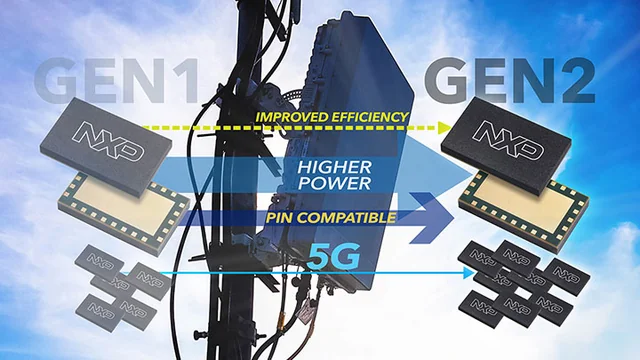
 NXP Semiconductors射频功率、汽车雷达与连接芯片 · RF power, radar and connectivity访问官网 →免费展示 · 资料来自公开信息 · 如需撤下请联系 ads@rfforum.com